Quito: A Colonial Jewel in the Andes
The Ecuadorian Andes are a sight to see! Nestled among these astonishing peaks, a series of adjoining valleys provide the backdrop to one of the most charming and vibrant capitals in South America: Quito. Whether you call it, Quito’s Historic Center, the historic quarter of Quito, or simply, Quito Old Town, it is a place filled with the scent of bakeries and cafés, where plazas invite visitors to observe the bustle of residents as they go about their daily activities. It is a district within which one can walk to any number of historic theaters, churches, museums, markets, and shops. There is a lot to see and do in the center of Quito!
It is no surprise that Quito Old Town is one of the best-preserved historic centers in the Americas. Afterall, it was one of the first places to be named a World Heritage Site by the UNESCO. It is a hub for commerce, government, the arts, and religion. Over the past several years, there has been renewed interest in making the historic center a more welcoming destination for tourists and businesses alike. Revitalization efforts have led to roads being converted into pedestrian-only thoroughfares, in addition to the inauguration of a major public transportation project – the Quito Metro – an entirely electric subway system that connects the city’s historic center with its north and south. The result is a drastic reduction in levels of air pollution that once plagued the city’s historic quarter and kept many people away.
Awaken to History, Culture, and Tradition
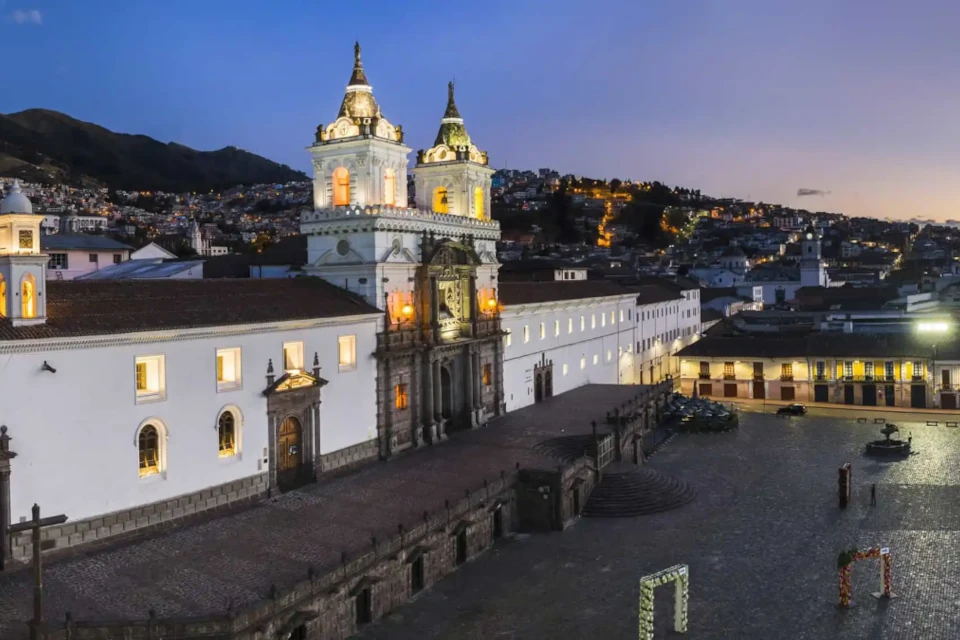
Having mentioned the Quito Metro, the stop that services the historic quarter is the stop at Plaza San Francisco. This is the original center of the city. It hosts a veritable treasure chest of impressive historical buildings. (The key is to be well-positioned to really take advantage of the short walking distances between so many different sites.) Along the southwest corner of San Francisco Plaza, you’ll find Casa Gangotena. Should your travels lead you to visit this extraordinary luxury boutique hotel, from it, you’ll be able to easily access some of the city’s most interesting sites. The best part is that, by staying in Quito Old Town, you won’t have to deal with cabs, traffic lights, and parking. You can just explore on foot, at your leisure!
The following are 15 reasons why you should definitely consider staying in the Historic Quarter of Quito:
1: Casa Gangotena Boutique Hotel
This Quito hotel is a renovated mansion with epic lore that offers a fascinating insight into the burgeoning capital’s history dating all the way back to 1600. Now a boutique hotel and restaurant, Casa Gangotena’s soaring ceilings, original frescoes, world-class restaurant, and spectacular rooftop terrace offer guests a unique place to experience Quito in luxury and style. It also serves as one of the most pivotal and convenient spots from which to explore Quito Old Town.
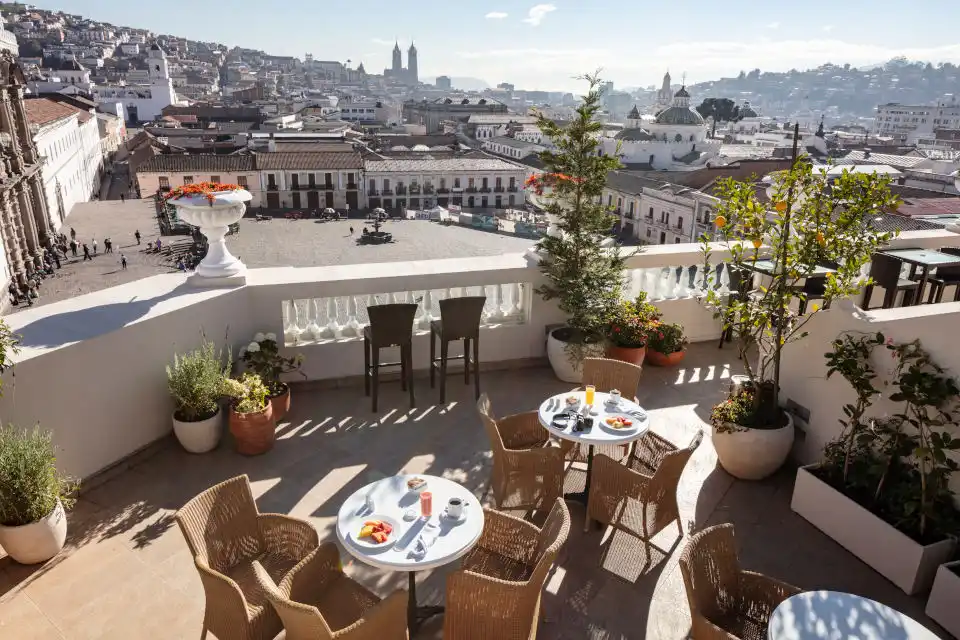
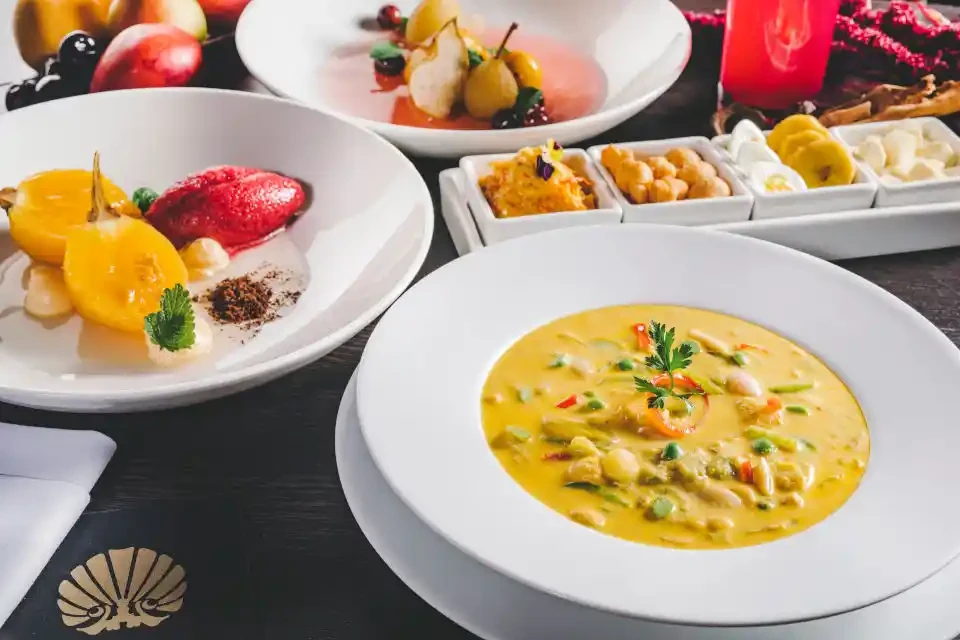
From its exquisite and popular (aforementioned) rooftop terrace, one can enjoy an excellent view of San Francisco Plaza and the historic district while savoring a handcrafted signature cocktail or delicious coffee… all before heading out to explore the secrets and wonders of Quito’s historic quarter. The comfortable lounge area, too, serves as a great place to cool down and enjoy one of the bar’s mouth-watering appetizers, while the spacious restaurant offers premium Ecuadorian dishes (with a terrific twist!) and first-class service.
Note: Casa Gangotena also offers exclusive, unparalleled tours that further deepen your experience of the capital, as well as luxurious experiences such as massages and gourmet treats throughout the day.
2: San Francisco Church & Convent
The immense San Francisco Church and Convent are hard to miss as they proudly stand together, shoulder-to-shoulder, along the highest side of San Francisco Plaza. Wide, centuries-old stone stairs lead up to the towering wooden doors of the church, which spans 3 hectares (7.5 acres). It took over 200 years to build. Upon passing through the entranceway, your eyes are easily captivated by a rich sea of colors inside. The roof, walls, and altar are all covered in gold, crimson red, and blue. On the walls, ecclesiastical scenes are portrayed in historic statues and stunning oil paintings.
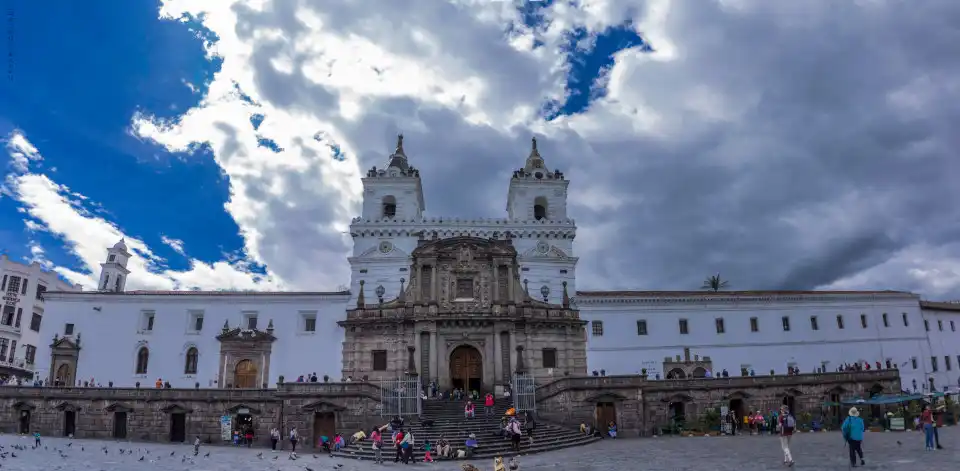
Next to the church is the convent, which shares the same stately white and stone pillars. As you enter the inner sanctum of this still functioning convent, the scent of an impeccably kept courtyard overflowing with colorful flowers and plants wafts over you, immediately taking you to another era and filling your senses with wonder.
3: La Iglesia de la Compañía (The Church of the Society of Jesus)
Although the outside of the Iglesia de la Compañía may appear understated with its baroque stone-cut facade, the two-story twisting pillars hint at the fact that it is a cut above the rest. Upon entering this Jesuit church, you can see why the entire nave is covered in gold leaf, gilded plaster, and wood carvings.
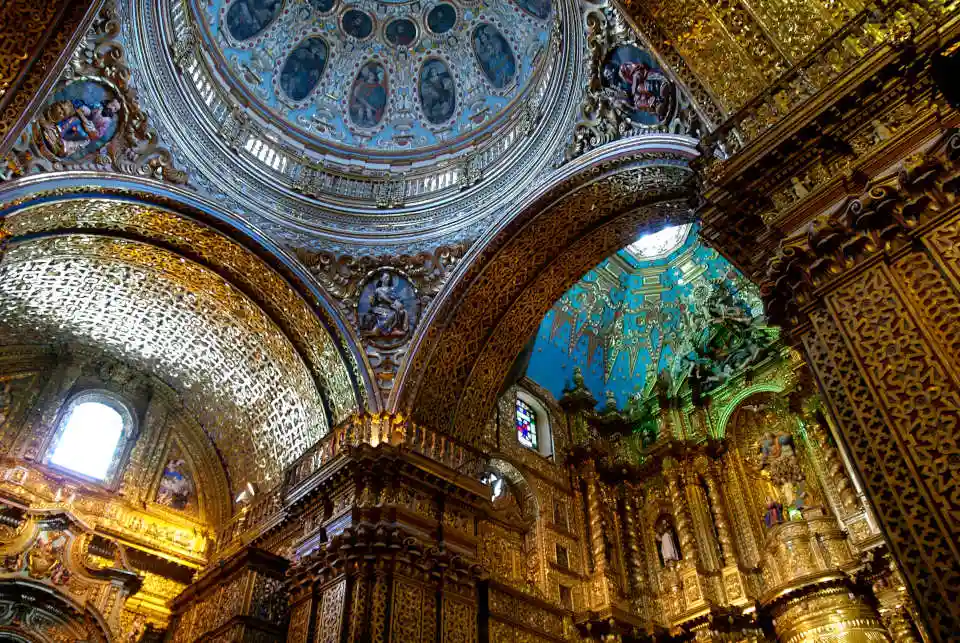
The effect is breathtaking as each individual and priceless piece of art reveals another piece of the story. La Compañía is Quito’s most ornate church and is internationally renowned for its gilded uniqueness. Some people say that it is the world’s most beautiful church, but, until you experience it yourself, you won’t be able to verify this statement.
4: Arco de la Reina (The Queen’s Arch)
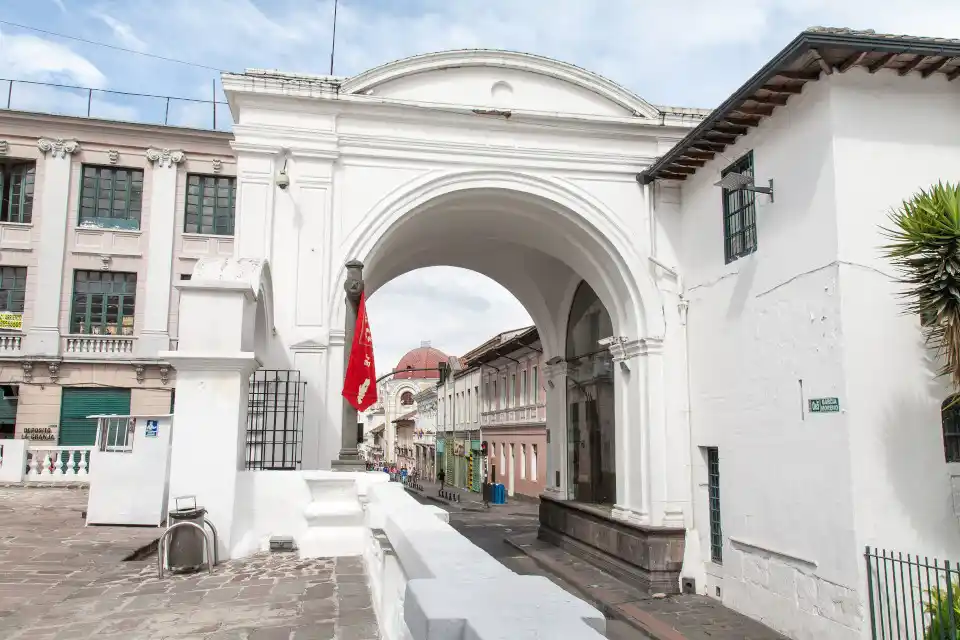
The Queen’s Arch is easily identified by its vivid orange and white colors as it soars over the narrow street right outside of the Carmen Alto Convent. It was originally built in 1726 to protect the old chapel’s indigenous devotees from the rain. A glass display area now stands where the chapel used to be, containing a vibrant oil painting of Nuestra Señora de los Ángeles.
5: Santo Domingo Church
On the outskirts of the historic district, Santo Domingo Church looks out onto another busy plaza, this one aptly named Santo Domingo Plaza. The church was constructed by the Dominican order and then modified by priests from Italy. It is a bona fide example of an amalgamation of Baroque, Neoclassical, and Moorish influences and styles. The result is elegance.
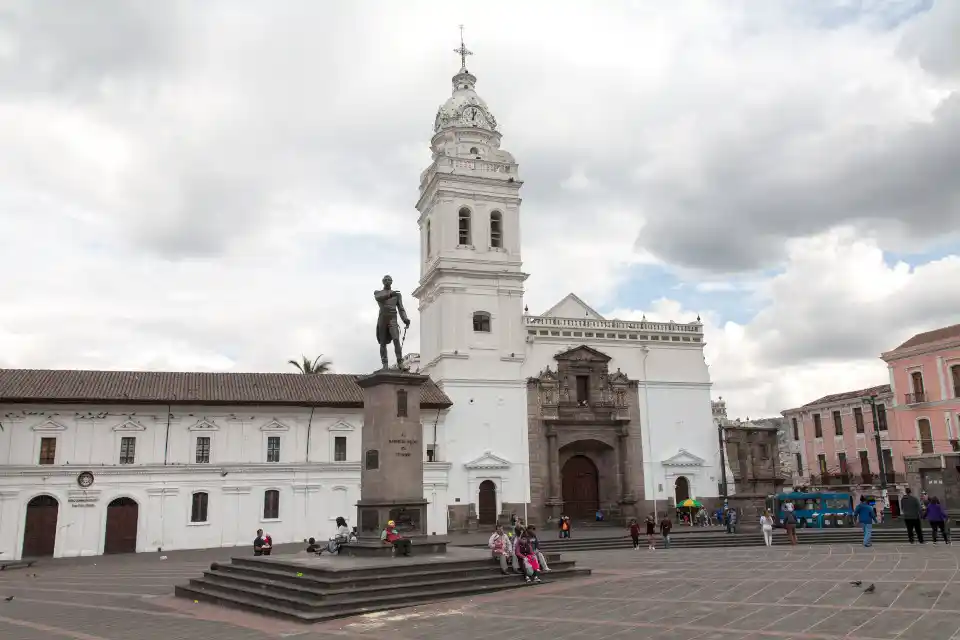
The church is a long, white building with an entrance clearly defined by tall and arched wooden doors. Inside, an explosion of colors bursts out in the form of carvings, reliefs, and gorgeous frescoes. The finite details of the Lady of Rosary Chapel are worth a close inspection as every inch is carefully painted and crafted in gold, royal red, and spirals of green.
6: Centro Cultural Metropolitano (The Metropolitan Cultural Center)
The Centro Cultural Metropolitano (Metropolitan Cultural Center) offers something special and unique for everyone. It shares the same building with a library and a restaurant, making the atmosphere here both inspiring and inviting.
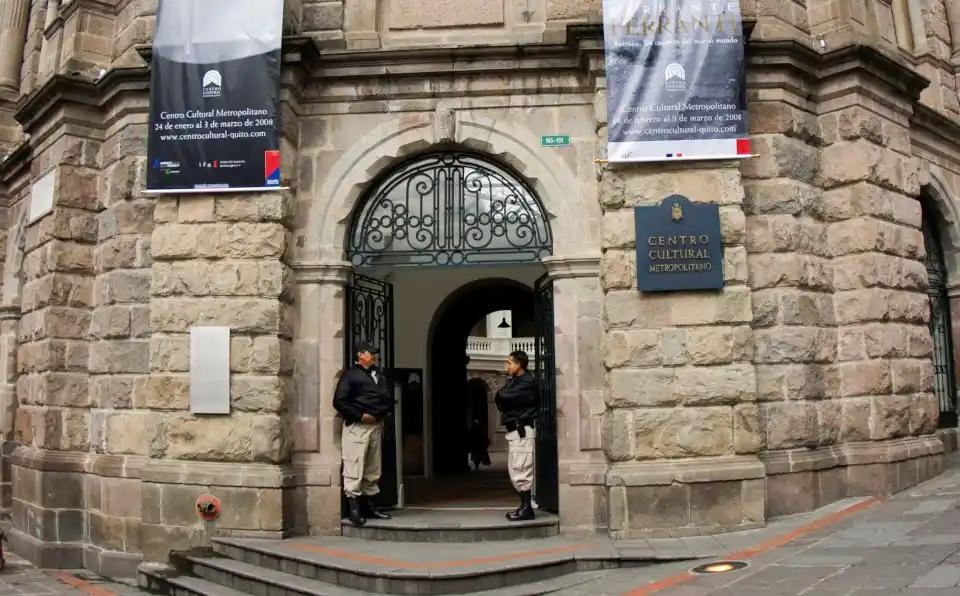
Its large, internal plaza is covered by an enormous glass dome that is impressive enough on its own, but the Centro Cultural Metropolitano offers visitors unprecedented, thought-provoking exhibitions, ranging from art to literature to history (and everything in between), creating a magical journey between the various, mood-lit rooms on its first and second floors.
7: Palacio de Gobierno (The Government Palace)
The Government Palace presides over the Plaza Grande with all the loftiness and grandiosity that a single building can encompass. The brilliant, white palace, occupies an entire city block in the middle of Quito’s historic district and is easily identifiable from every angle thanks to the gigantic Ecuadorian flag that waves around proudly from its rooftop. Ceremonial guards stand attentively on either side of the grand entrance. While the atmosphere of the palace evokes an air of seriousness and tradition, governing Ecuador as its president is no easy feat.
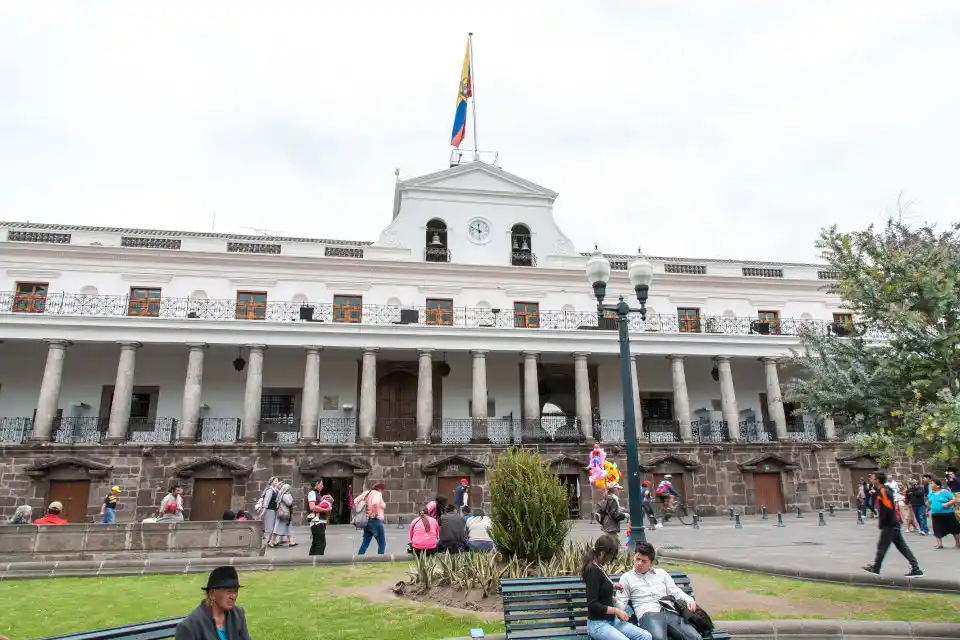
Right underneath the double-balconied façade, small bustling shops sell everything from popsicles to Christmas decorations. A tour through the palace gives visitors a deeper understanding of how Ecuador is governed and even allows you to take a few token photos with the statuesque guards.
8: Catedral Metropolitana de Quito (Metropolitan Cathedral of Quito)
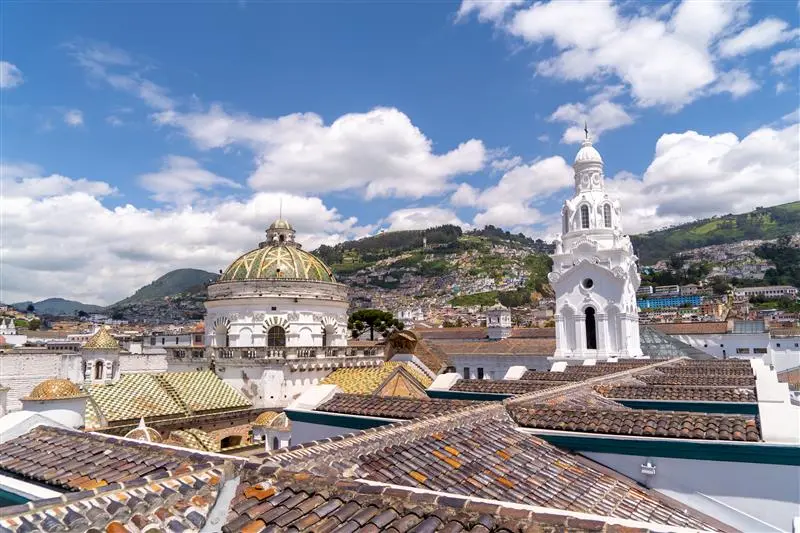
You can tell the Cathedral is an important piece of Quito’s history, having undergone several reconstructions since first being built in 1535 along what was then one the city’s main squares, which is now called La Plaza de la Independencia (Independence Plaza). The current iteration features a mostly white façade with wide stone stairs and pillars that surround the front entrance. Inside the church, visitors are often awe-struck by the beauty of everything they see.
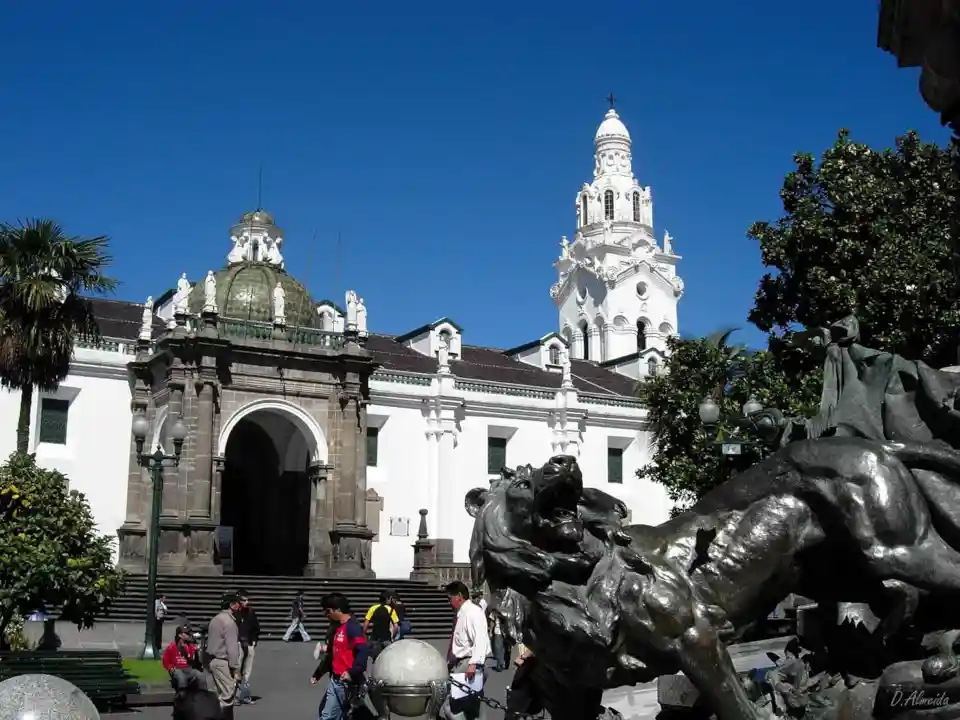
Stone pillars combine with generous wood carvings and paneling along every wall. Golden candelabras hang at every corner and small arches lead you toward the main altar, which itself is bathed in rich hues of green, gold, and red. All of this leads the eye to the most prominent painting inside the church – one of the Virgin Mary. However, if you look up at the dome above the altar, you’ll find that it is brightly decorated with angels gliding among the clouds against a golden sky.
9: Museo del Carmen Alto (Carmen Alto Museum)
Attached to the double-towered and timeworn Carmen Alto Church is its namesake museum. This museum evokes a reverence and awareness of history even before visitors walk through its doors: the large square foyer outside the museum leads you to believe that you are visiting a truly special and privileged place.
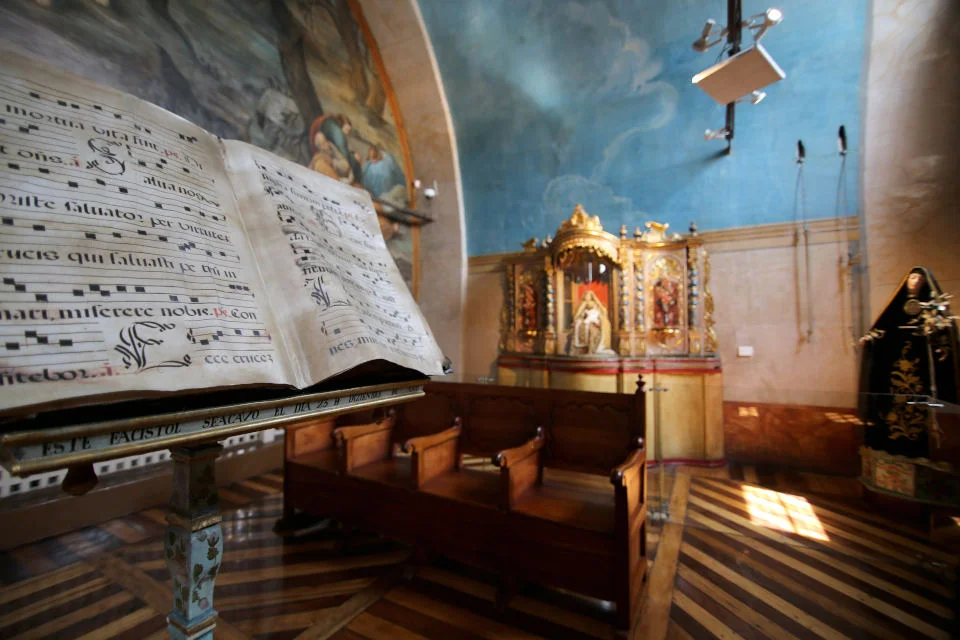
Once inside, visitors are welcomed with a collection of Carmelite Heritage Art, capturing impressions of the daily lives of the sisters of the Descalza Carmelite Order, and the life of Mariana de Jesus – an Ecuadorian heroine and saint. The original wooden doors hang at each doorway, exposed beams framing immaculate white ceilings. Each piece has been carefully and lovingly displayed by devout caretakers.
10: Museo Casa del Alabado (The Acclaimed Pre-Columbian Art Museum)
The Casa del Alabado Museum may appear small upon entering, but don’t let that fool you. This Ecuadorian pre-Columbian art museum displays some of the city’s most precious and valuable artifacts. In total, the museum is home to 5,000 archaeological pieces; 500 of which are on continuous display.
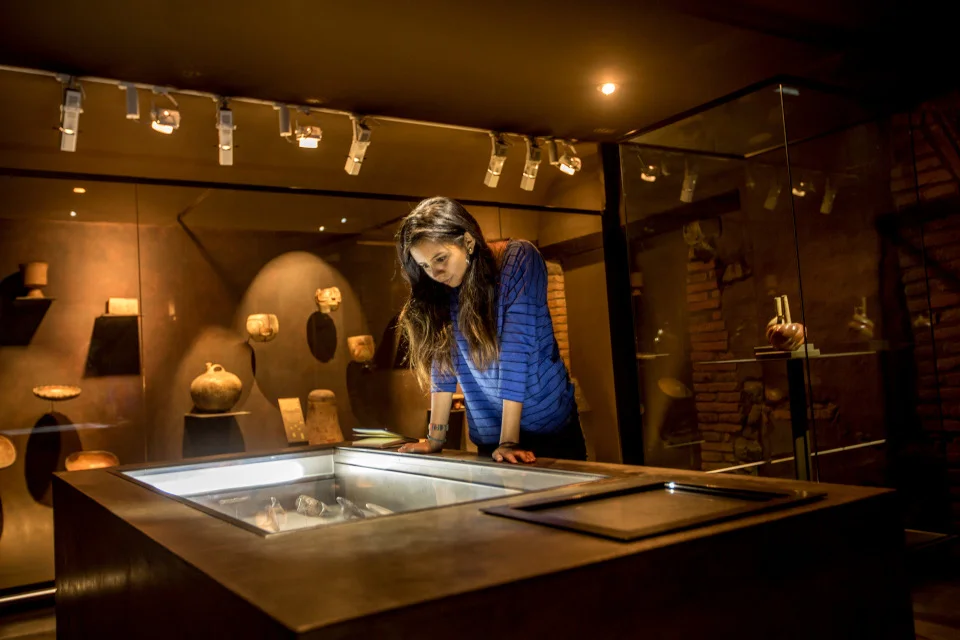
These pieces are visible, quite fittingly, within a tastefully restored colonial house that was built in the 17th century. The exposed-stone walls enhance the experience of viewing these pieces and understanding the stories they tell. From the handcrafted wood balcony looking onto the house’s interior courtyard, visitors can enjoy a gentle respite from the bustling city outside.
11: Basílica del Voto Nacional (Basilica of the National Vow)
La Basílica del Voto Nacional dominates virtually every existing view of Quito Old Town. This enormous neo-Gothic church is the largest of its kind in the Americas, with two spire-like towers that rise far above the front-facing side of the church, giving it an almost imperious and commanding appearance. Hidden meanings and details are scattered throughout the Basilica, and even the gargoyles on the side of the church represent different Ecuadorian animals including armadillos, howler monkeys, pumas, and even Galapagos giant tortoises.
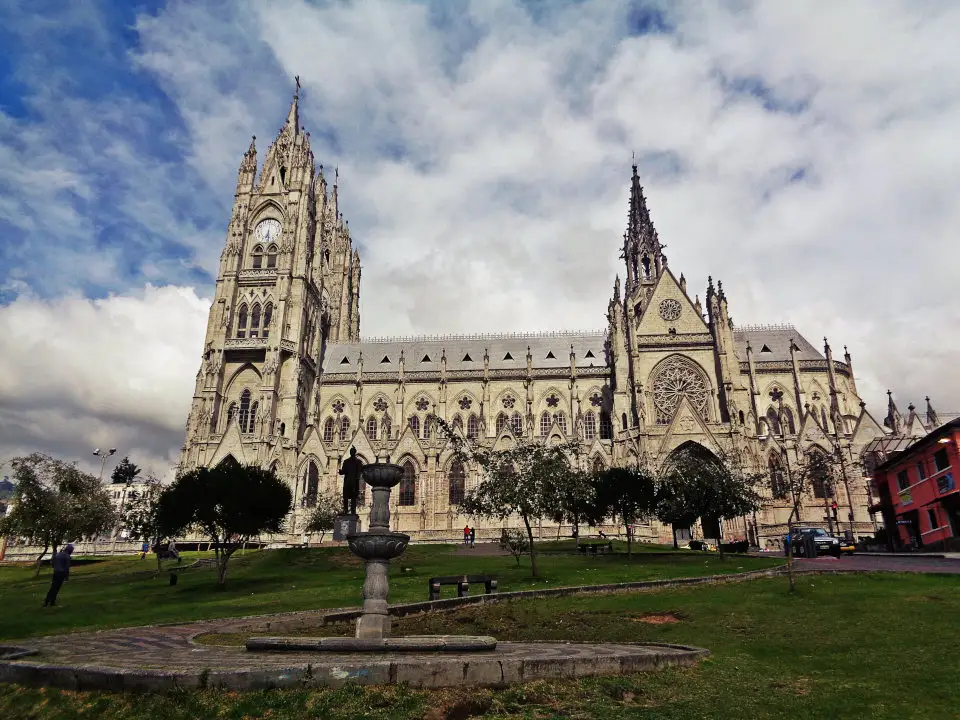
The circular rose window bathes the chapel in a mystical glow in contrast to the stark grey stones that were used in its construction. The spiral stairways inside the church lead to the towers, offering visitors a breathtaking view of Quito and its surrounding mountains upon reaching the top. As you cross the catwalk along the inside ridge of the roof, it is easy to wonder just how much history this enormous building holds. Although the ladders up to the smaller tower seem death-defying, the view is even more spectacular than the one at the top of the spiral stairways. This church offers visitors a variety of experiences in the form of architectural exploration.
12: Teatro Nacional Sucre (The Sucre National Theater)
No detail was spared in making certain that the outside of the Teatro Nacional Sucre (The Sucre National Theater) reflected the same pomp and splendor that is on display within. Its exterior facade is snow white, which only further emphasizes the golden highlights and wooden frames of the arched windows.
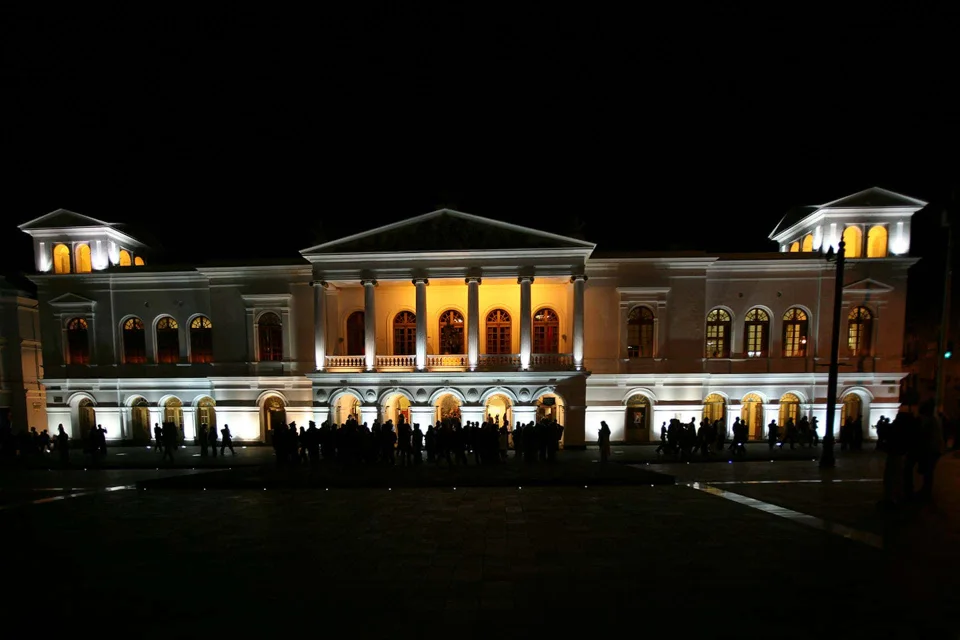
The iconic pillars lead your gaze up to the gable, where golden statues depict a scene of Apollo and other Greek gods. The theater itself offers three-tiered, red-velvet seating with pale yellow walls and an enormous crystal chandelier overseeing it all. The Teatro Nacional Sucre showcases both local and international musical performances ranging from jazz to classical; so, rest assured, there is something for everyone to enjoy.
13: Teatro Bolívar (Bolivar Theater)
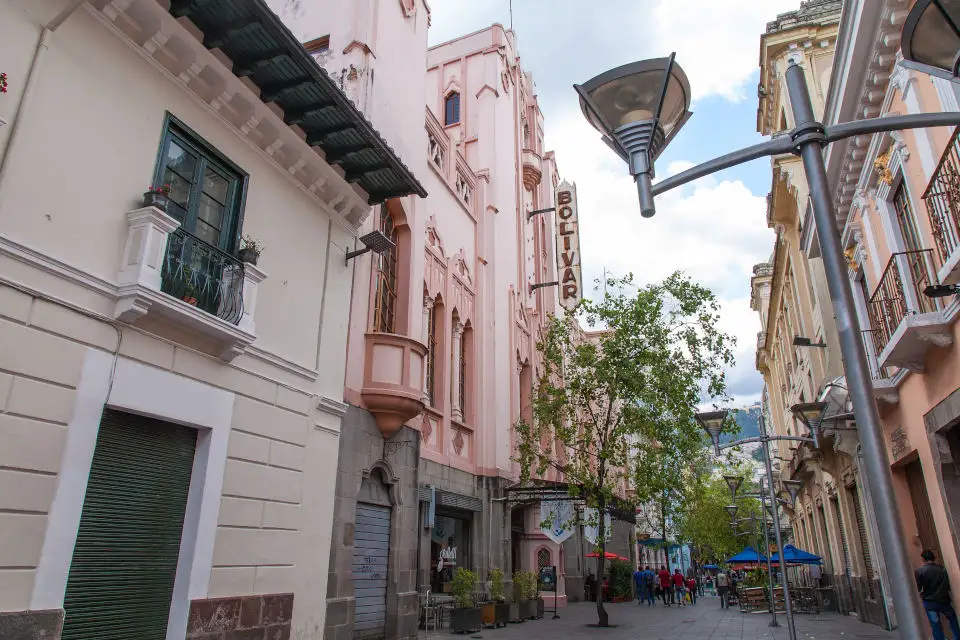
From the outside, the Teatro Bolívar (Bolívar Theater) is immediately recognizable. This pink building features a long, vertical, backlit sign with a vintage font. Just below it, the original ticket booth stands center front of the entrance. Inside, a huge chandelier illuminates the mirror-lined lobby, beyond it, a theater adorned in detailed wood trim, cylindrical columns, elegant sconces, and burgundy seats, features high rounded ceilings and welcomes attendees to a variety of performances throughout the year in an atmosphere of both grandeur and elegance. Golden arches line both sides of the theater, accented in the same royal red as the stage curtains. Enjoy the show!
14: Calle La Ronda (La Ronda Street)
You’ve probably heard of a boutique hotel or restaurant, but have you ever heard of a boutique street? La Ronda squeezes everything a tourist could ever dream of into a cobblestone lane that’s lined with colorful buildings and balconies that have been cheerfully decorated with overhanging flowers and Ecuadorian flags. The shops offer every handcrafted souvenir possible, and even host workshops on how some of their wares are made!
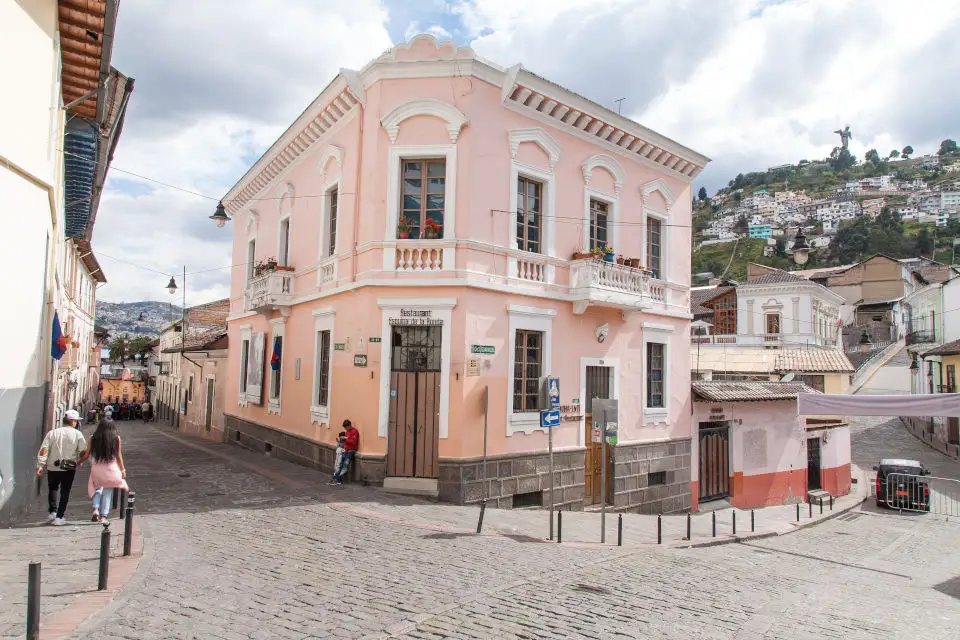
Multiple shops demonstrate to visitors how they craft their products, including chocolate and other confections. A sense of festivity can always be found here, especially at night when the street awakens as the bars and the best restaurants in Quito begin featuring live music and offering traditional Ecuadorian drinks and food, including canelazos and empanadas. The streets, too, are often filled with performers and even carnival-style games.
15: Barrio San Marcos (San Marcos Neighborhood)
When a neighborhood has, as one of its most prominent features, a one-of-a-kind café located inside an ancient church, you know you are in for a treat. The picturesque neighborhood of San Marcos offers visitors an authentic experience of life in Quito, inviting you down its streets, flanked by green, pink, and blue buildings, featuring balconies overflowing with brightly colored flowers.
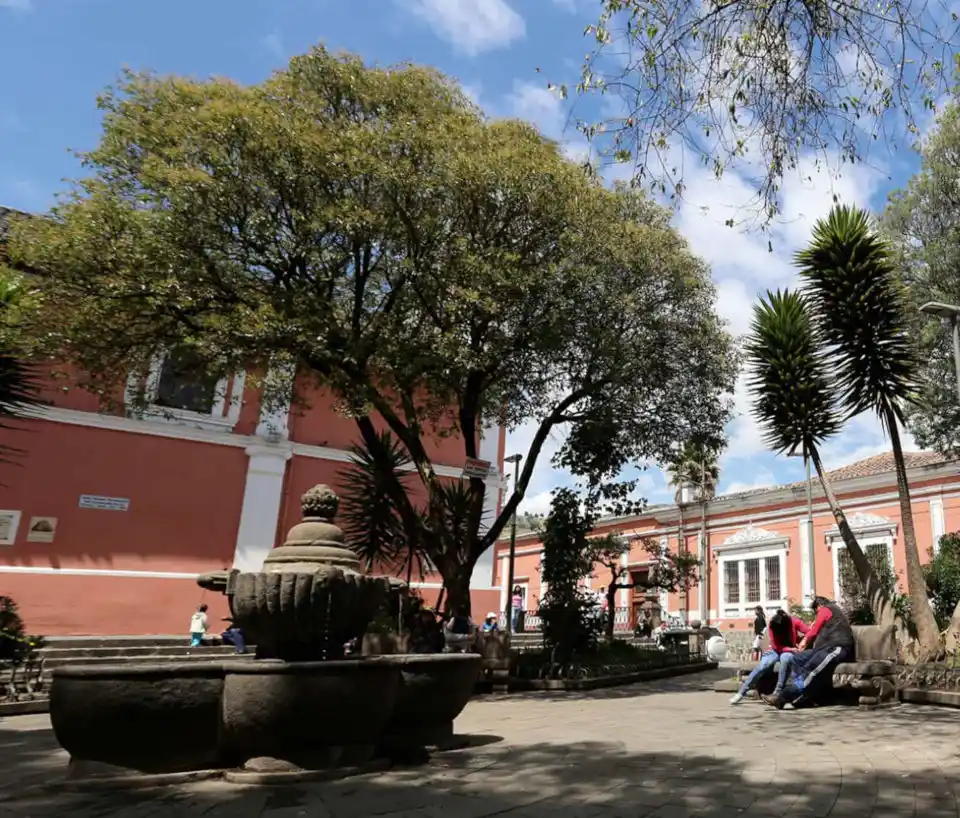
Vendors of fruits and vegetables welcome you to check out their stalls while children playing on the street smile and wave. As you wander through the neighborhood, you can explore different galleries, shops, or museums. Should you need to recharge, there is always a café or restaurant ready to provide you with a warm and pleasant experience. The air here is always filled with relaxed laughter and chatter mixed with the aromas of fresh fruit and coffee.
When is the perfect time to visit and stay in Quito Old Town?
With the city’s renewed focus on preserving its past and planning for its future, there is no time like the present to visit Ecuador. High in the Andes Mountains of South America, the city continues to steadily modernize itself while dedicating its energy and efforts to preserving its past, all the while making this gem a welcoming and inviting place. Staying in the historic district is a surefire and easy way of experiencing the best of what Quito Old Town has to offer, including its many museums, churches, festivals, restaurants, and cafés, all within walking distance!