Skip to content
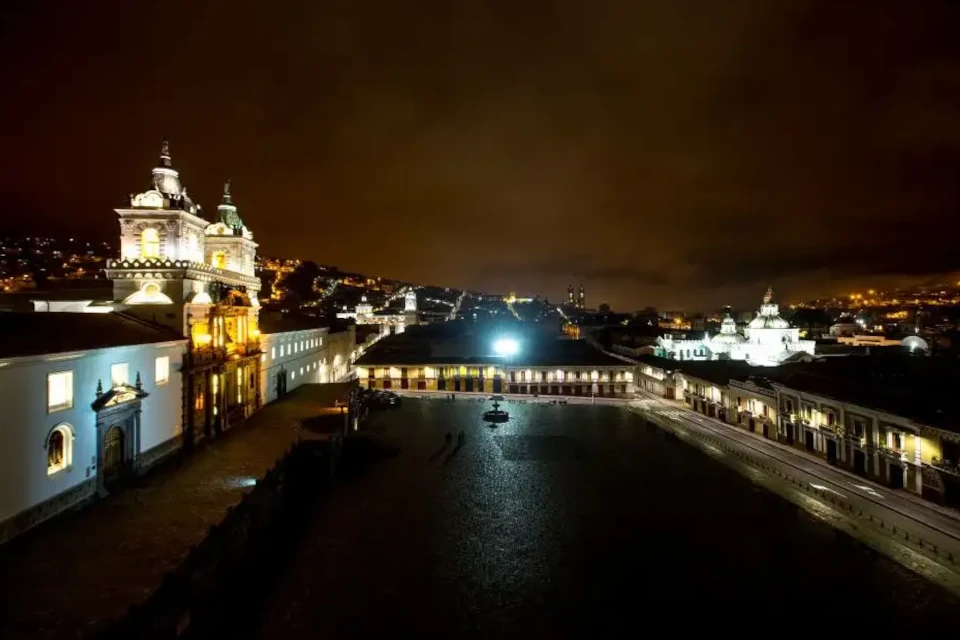
Did you know that Quito is home to one of the most exquisite examples of Baroque and Renaissance architecture in its historic center? At the heart of this historic city lies the impressive Iglesia de El Sagrario, a masterpiece that stands as a testament to the talent and craftsmanship of centuries past.
Quito’s rich architectural heritage attracts visitors worldwide, and El Sagrario is one of its most outstanding jewels. This stunning church showcases intricate design and craftsmanship and tells a story of cultural and historical significance etched into its walls.
We will explore the fascinating history, striking architectural details, and artistic treasures of the Iglesia de El Sagrario and discover why it remains a must-visit destination for anyone studying the city’s historic center.
History of the Iglesia de El Sagrario
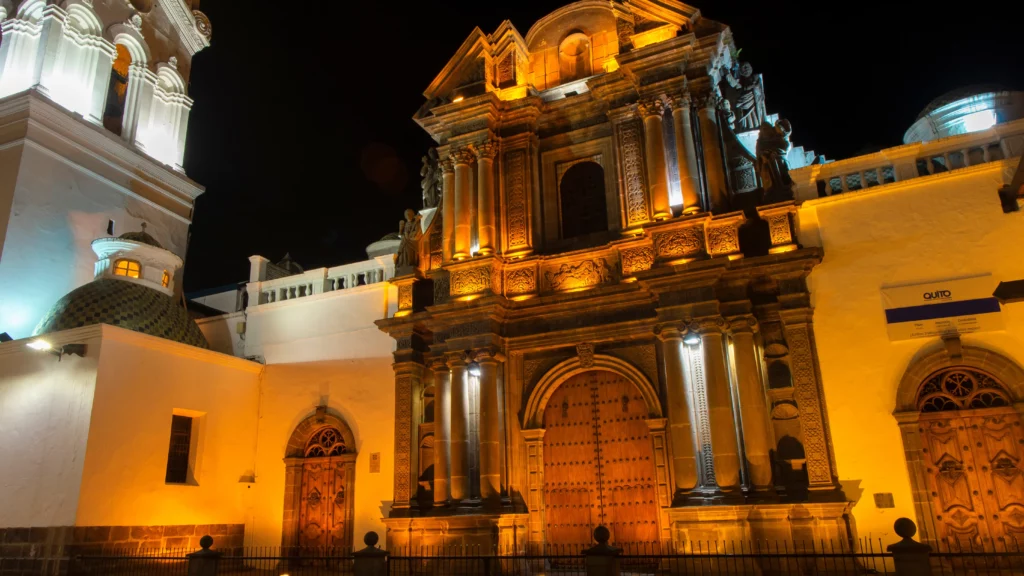
The Iglesia de El Sagrario is one of the most iconic temples in Quito’s historic center. Its construction began in 1675 and extended until 1747, led by architect José Jaime Ortiz. Located near the Plaza de la Independencia, the church was built to fulfill the need for a space dedicated to worshiping the Holy Sacrament.
However, El Sagrario’s significance goes beyond its architecture. During the colonial period, Quito was South America’s cultural and religious hub. The church became a spiritual and social gathering point for the city’s inhabitants, reflecting their appreciation for religious art and the mastery of the Quito School.
Architectural Details of the Exterior
The exterior of the Iglesia de El Sagrario is a remarkable representation of sober Baroque design, blending elegance with intricate details. Its stone facade, completed in 1706, combines simplicity and grandeur, making it a true highlight in Quito’s historic center.
One of the most prominent elements of the facade is the seal of the Cofradía del Santísimo Sacramento, prominently displayed above the main entrance. This emblem represents the church’s origin and dedication, as it was founded under the initiative of this religious brotherhood.
Four sculptures draw attention at the top of the facade. The figures of Saint Peter on the northern side symbolize faith, and Saint Paul on the southern side represents hope, enriching the facade with meaning while showcasing the artistry of the era.
Interior of the Church
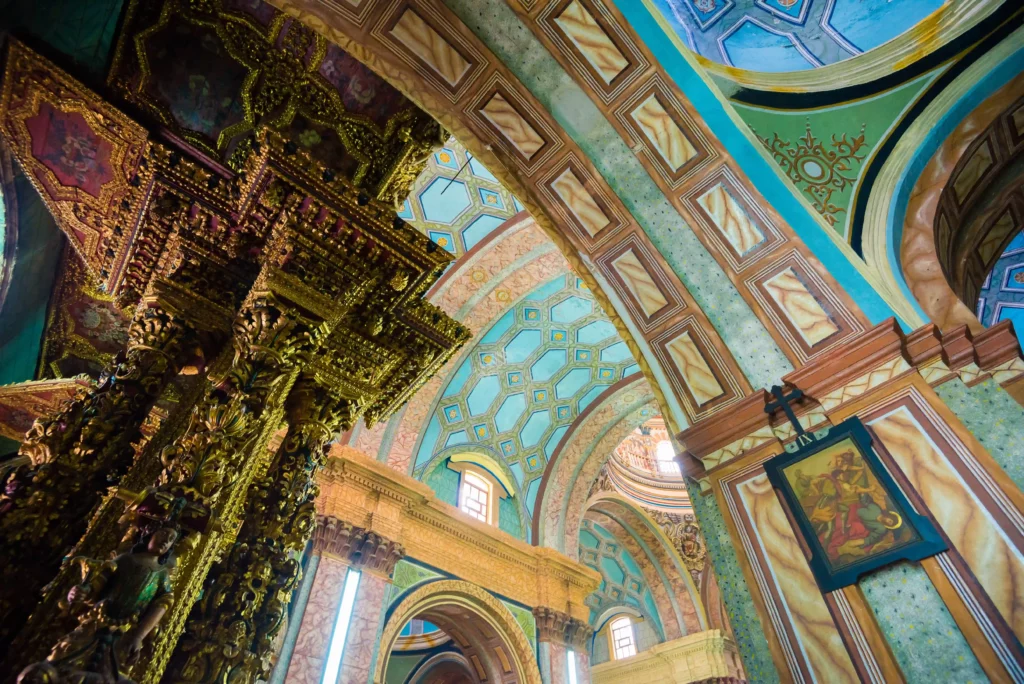
Entering the Iglesia de El Sagrario is like stepping into a masterpiece of artistic and spiritual devotion. The interior is a dazzling display of Baroque art that leaves visitors in awe.
The Central Nave
At the heart of the church is the main altarpiece, a centerpiece crafted with meticulous detail. Its surface gleams with gold leaf, creating a radiant glow. At the center of this altar is an impressive sculpture of the Sacred Heart of Jesus, symbolizing love and devotion. The intricate carvings and shimmering gold reflect the exceptional artistry that defines Quito’s colonial churches.
The Side Aisles
The side aisles are equally breathtaking. Each side features three wooden altarpieces, making six, all designed in Baroque style. These altarpieces are also covered in delicate layers of gold leaf, enhancing their richness and beauty. Their ornate details depict biblical scenes and religious imagery.
The Influence of the Quito School
The church’s interior is a testament to the skill of the Quito School, a renowned artistic movement that blended European techniques with local traditions. This influence is evident in the carvings, floral motifs, and the vibrant use of gold, elevating the church’s interior into a timeless work of art
The Mampara of the Central Nave
Among the numerous treasures housed within the Iglesia de El Sagrario, the mampara of the central nave stands out as its most remarkable masterpiece. This extraordinary work of art is a testament to the exceptional skill and creativity of Bernardo de Legarda, one of the most celebrated artists of the Quito School.
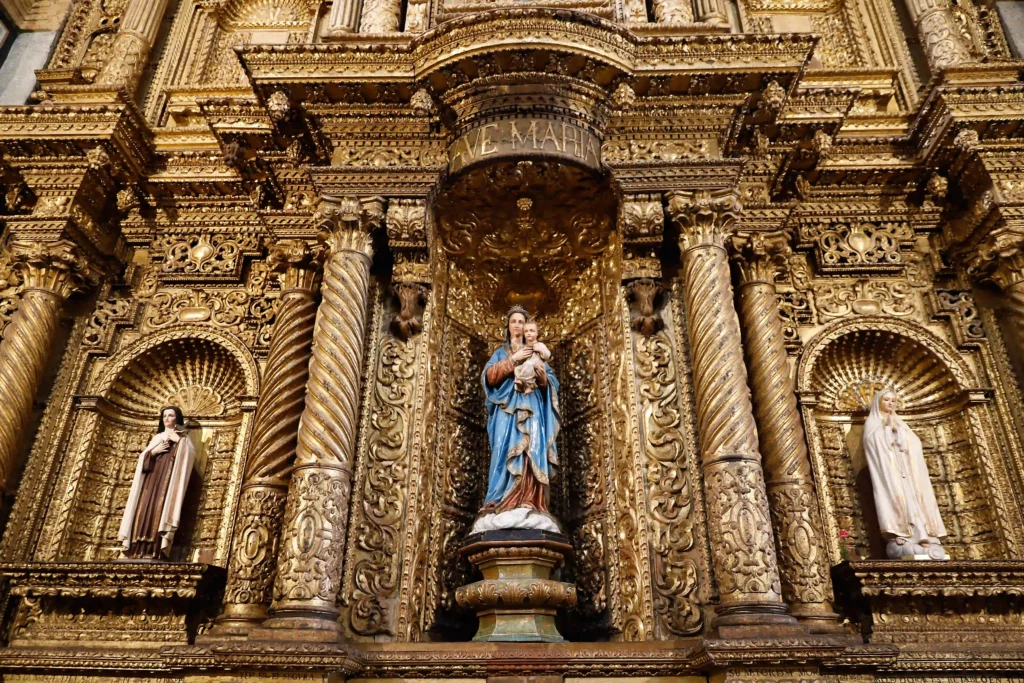
The mampara, a sculptural partition that graces the central nave, features an arched doorway framed by elaborately adorned columns. Each column bursts with carved decorations of leaves and flowers, showcasing the unparalleled craftsmanship of the time.
Intricate mascarones and angelic figures surround the central arch, adding a sense of spiritual reverence and visual harmony. These details elevate the mampara’s design, making it a superior example of Baroque artistry and earning it recognition as one of Quito’s finest works of art.
The creation of this magnificent piece required immense patience and dedication. Spanning over seven years, every detail of the mampara was meticulously crafted to achieve its breathtaking final form. The mampara of the central nave is more than just a decorative feature, it is a symbol of ingenuity and devotion.
The House of Manuela Cañizares
Next to the Iglesia de El Sagrario lies the historic Casa de Manuela Cañizares, a unique site in Ecuador’s fight for independence.
Manuela Cañizares, a brave and determined woman, transformed her home into the epicenter of revolutionary plans. Local revolutionaries gathered there to conspire against Spanish rule one night, determined to overthrow the Count of Ruiz de Castilla. However, Manuela’s unwavering determination reignited their courage when doubts and hesitations began. Her bold and now-famous words, “Men born for servitude, what are you afraid of?” challenged them to act decisively and remain etched in Ecuadorian history.
This bravery led to the First Cry of Independence, which marked the beginning of Ecuador’s long road to freedom.
Explore the Living History of Quito
The Iglesia de El Sagrario is more than a place of worship, it is a living testament to Quito’s rich history and artistic legacy. Every stone in its facade, every golden altarpiece, and every intricately carved detail tells a story of faith, craftsmanship, and cultural pride.
Visiting El Sagrario is an experience that transcends time. It invites you to immerse yourself in its beauty, reflect on its historical significance, and marvel at the art that has stood the test of centuries. Explore this treasure, feel its timeless presence, and be part of the story it continues to tell. Where will your next adventure in Quito’s historic center take you?