Skip to content
In the heart of historic Quito, true treasures await explorers. This place is the Casa del Alabado Museum, which has yielded pre-Columbian relics. The museum invites visitors to be inspired by the cultural wonders found in each room and appreciate Ecuador’s ancestral cultures over the years.
The museum plays a vital role as a guardian, not only for the physical pieces but also for the extensive ancestral knowledge that must be made known to the people who visit the place and, above all, preserve this invaluable heritage for future generations.
Colonial Architecture
The façade of the museum is a clear example of 17th-century colonial architecture. Built at a time when the new world began to have European influences, this building has endured over time thanks to a careful restoration that respects and celebrates its historical roots. The original structure was made using local materials such as barbeque (a mixture of mud and straw) and carrizo (bamboo reeds), traditional techniques that have been carefully preserved to maintain the house’s authenticity.
The Museum Experience
Visiting this museum is like opening a door to times gone by. Each exhibition room tells a story that transcends generations. In a world where speed and ephemerality dominate, museums are a refuge for reflection, learning, and inspiration.
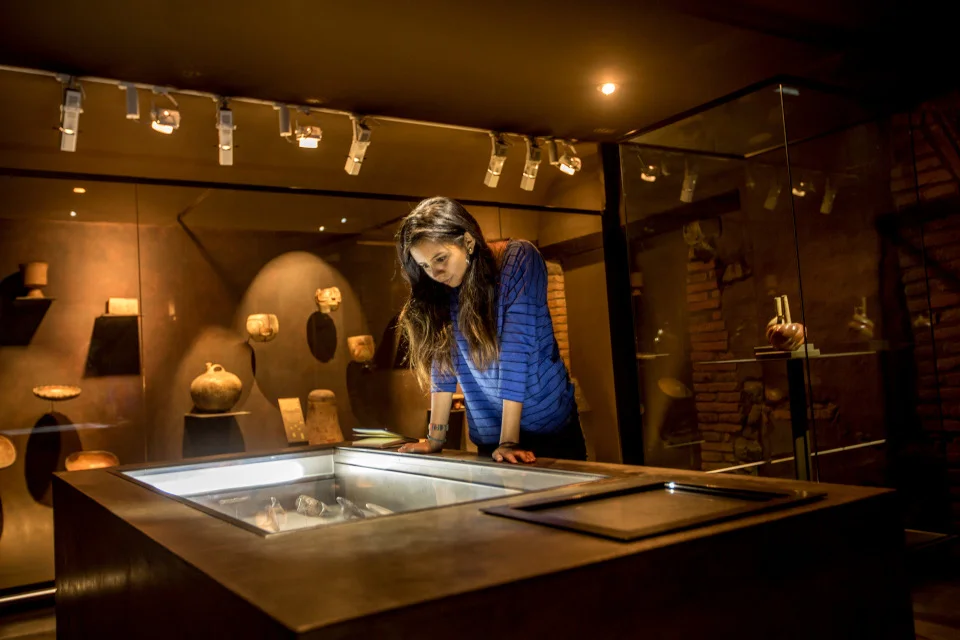
We invite you to explore this tremendous cultural and artistic journey with almost 5,000 pieces from various cultures, such as Valdivia, Chorrera, and Jama-Coaque. This museum has 14 permanent rooms, one temporary exhibition room, and two rooms with educational activities. It should be noted that the rooms are not organized chronologically but by themes. This allows you to learn about the worldviews of ancient peoples more broadly.
Unmissable Exhibits
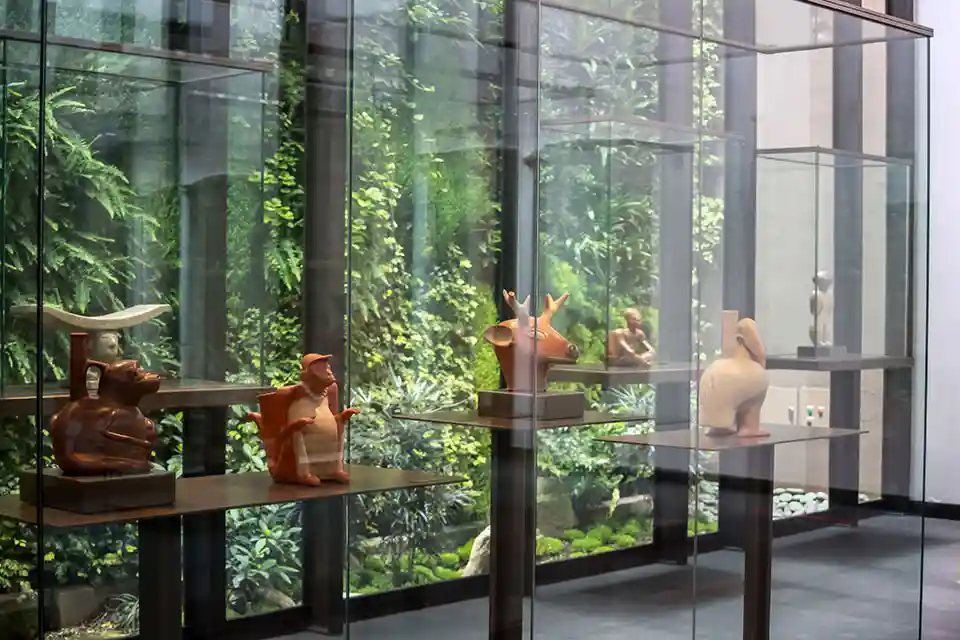
When one begins to delve into the world of Ecuador’s ancient civilizations, one finds a box of treasures that not only tell stories of times past but also reveal the creativity and ingenuity of those who once created them. Among the many objects in the museum, one stands out: the six-sided monolith, an important piece of the Valdivia culture.
The six-sided monolith is a unique piece representing a perfect balance between expansion and balance, fundamental characteristics in many ancient cultures. Each face of the monolith shows engravings that symbolize different stages of life or natural elements for the Valdivian community. These symbols are decorative and serve as a type of language to transmit stories across generations about daily life and spiritual beliefs deeply rooted in these communities.
Fun Fact about the Museum’s Name
The story behind the name “Casa del Alabado” begins with an architectural quirk. At the main entrance of this colonial house is a description that has attracted the attention of historians and visitors alike. Although already incomplete, this description reveals fragments that have been interpreted as part of a religious text during the colonial period in Quito. The term “alabado” has roots in expressions of praise and adoration, typical within the Catholic religious contexts of that era.
During the sixteenth and seventeenth centuries, life in Quito revolved around the Catholic religion, so it was common in both public and private buildings to find phrases such as ”Praise the Lord or Most Holy Sacrament of the Altar.” These phrases were used to bless or protect the property.
Visitor Information
One of the most important aspects to consider before planning your visit to the Casa del Alabado Museum is to know the days it is open to the public; this place is open from Wednesday to Sunday from 9 am to 5 pm, if you wish to visit on Mondays or Tuesdays, you must contact the museum via email to plan a reservation to receive you on those days. The entrance to this place costs a general rate of $6 for nationals and foreigners. Its reduced rate for seniors is $3, for children and students $2, and for people with disabilities, it offers free admission.
Another important point is that you can visit the museum freely. That is, you can go through the museum at your own pace and see what you want to see, but if you want a guided tour, the museum also offers it. Guided tours are an excellent option for visitors who want to understand the place they are exploring in depth. You just have to book it on their official website, and each tour lasts 30 minutes.
Connection between past and present
Ecuador has a significant cultural and archaeological legacy that dates back thousands of years before the arrival of the Spanish conquistadors. The Casa del Alabado Museum is located in the heart of Quito’s old town, a space that offers a deep, immersive, and emotional experience about the pre-Columbian cultures that occupied this territory. This museum preserves ancient material culture, but it is also a place where you must go to understand and enjoy Ecuadorian ancestral heritage.
It is a fundamental place for those who want to connect with the essence of the civilizations that shaped this territory and those who wish to contribute to conserving this valuable legacy.